
How Should Investors Compare a Technology Company’s Earnings With Its Cash Conversion?

A three-year Salesforce reconciliation shows why cash can exceed earnings without being freely available to shareholders, and which differences should change your forecast.
How Can Investors Tell Whether Stock Buybacks Are Offsetting Stock-Based Compensation Dilution?

Big repurchase spending doesn’t necessarily mean your ownership increased. Reconcile shares issued, withheld, and repurchased, then examine what the result cost.
What Does a Software Company’s Remaining Performance Obligation Backlog Tell Investors About Future Revenue?

Remaining performance obligations provide evidence of contracted future revenue, not guaranteed next-year sales. Recognition timing, contract terms, and disclosure exclusions determine how useful that evidence is.
How Do Longer Useful Lives for AI Chips and Servers Affect Earnings and Cash?
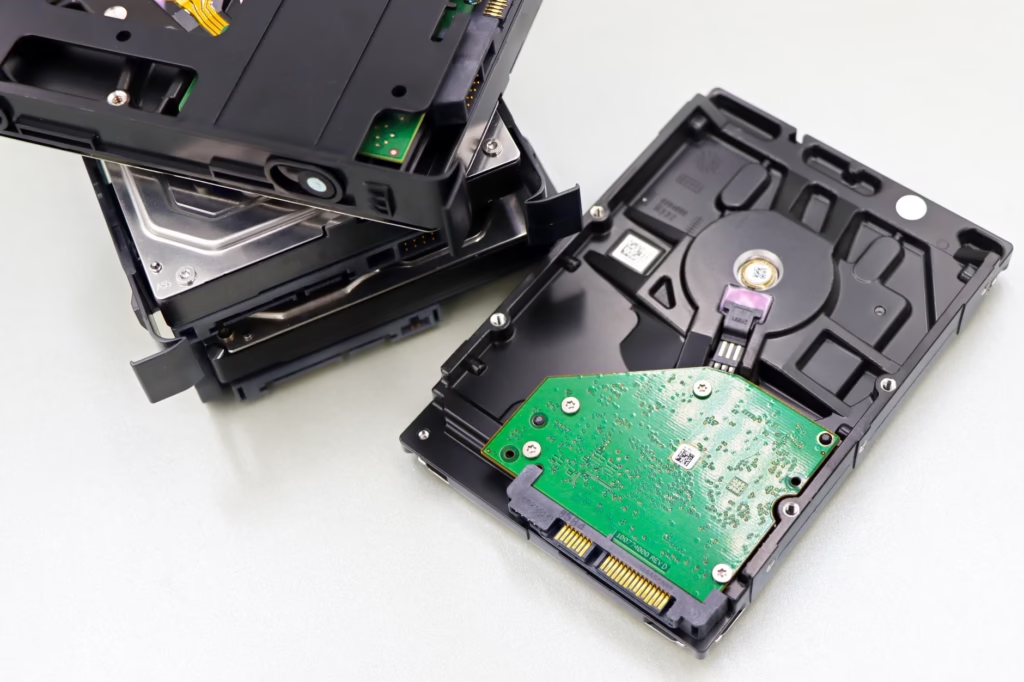
Longer depreciation schedules can lift technology-company earnings without reducing equipment payments. Here’s how to separate that accounting benefit from genuinely lower replacement costs.
How Should Investors Account for Stock-Based Compensation?

Stock-based compensation reduces reported earnings, gets added back in operating cash flow, and can dilute ownership. Those measures answer different questions. Here’s how to combine them without ignoring compensation or
The Most Important Financial Metrics for Evaluating Tech Companies

Tech companies can look very different depending on whether you focus on revenue, margins, cash flow, or adjusted earnings. These are the financial metrics that usually matter most, and how to read them together.