If the goal is multi-year growth rather than the next hot trade, the strongest technology sectors are usually the ones selling infrastructure instead of novelty. That points first to three areas: semiconductors, cloud and data-center infrastructure, and cybersecurity. The logic is straightforward. Chips sit underneath AI and advanced communications, cloud spending is still projected to expand over the next several years, data-center electricity use is rising as computing loads get heavier, and cyber threats continue to impose real costs on businesses. (semiconductors.org)
That does not mean every company in those sectors is a buy. A strong sector can still produce weak returns if competition is brutal, margins are thin, or the stock price already assumes flawless growth. A sector view should narrow the field, not end the work.
Table of Contents
Use a simple filter before you call a sector a long-term winner
- Start with necessity. Ask whether customers can realistically cut this spending in a downturn, or only delay it briefly.
- Prefer picks-and-shovels exposure. A sector is usually stronger when many future products depend on it, not just one popular app or device.
- Look for durable economics. Switching costs, proprietary technology, recurring revenue, and ecosystem lock-in matter more than headline growth alone.
- Respect the cycle. Capital-intensive businesses can have excellent decade-long prospects and still be painful over a one- or two-year stretch.
A practical test helps here: if today’s favorite AI application fades, does the sector still win because other customers still need the same compute, storage, networking, or security? If the answer is yes, the thesis is much sturdier. A hypothetical infrastructure supplier serving many enterprises and cloud platforms is often a more durable long-term bet than a single-feature software story whose popularity can reverse quickly.
Semiconductors remain the widest technology picks-and-shovels play
Semiconductors still offer the broadest long-term exposure because nearly every digital trend eventually reaches the chip layer. The Semiconductor Industry Association’s 2025 state-of-industry report describes chips as foundational to the digital world and essential to areas such as AI, advanced communications networks, and defense systems. For investors, that means one sector can capture several durable demand streams at once, including AI training and inference, automotive electronics, industrial systems, networking, and edge devices. (semiconductors.org)
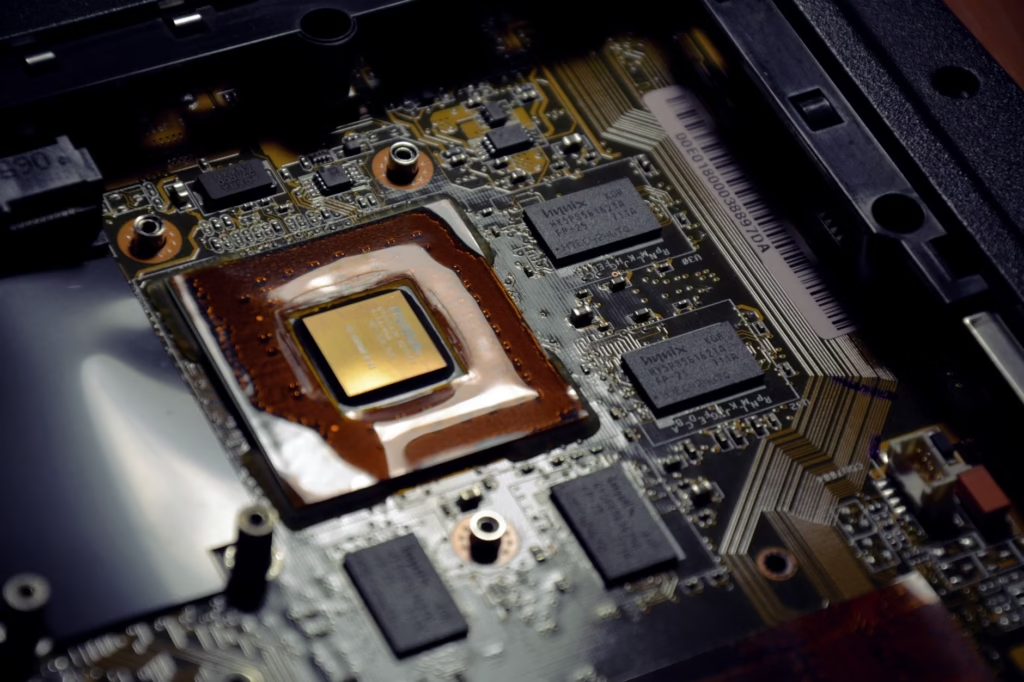
The nuance is that semiconductors are not one business model. Memory, analog, foundry services, chip equipment, packaging, and design software can behave very differently. For steadier long-term compounding, the more attractive part of the chain is often where there is specialized intellectual property, a manufacturing bottleneck, or tools the rest of the industry cannot easily replace. That does not remove cyclicality, but it can improve the odds that a company keeps its importance even after the hottest product cycle cools.
Cloud and data-center infrastructure can benefit even if AI leaders change
Cloud and data-center infrastructure may be the cleanest way to invest in AI without having to predict which application layer will dominate. In Gartner’s June 2025 update, public cloud services spending was forecast to grow 17.9% in 2025 and reach $1.47 trillion by 2029. At the same time, the U.S. Energy Information Administration projects electricity consumed by data-center servers will keep rising across the commercial building stock, with especially strong growth in standalone data centers. (gartner.com)
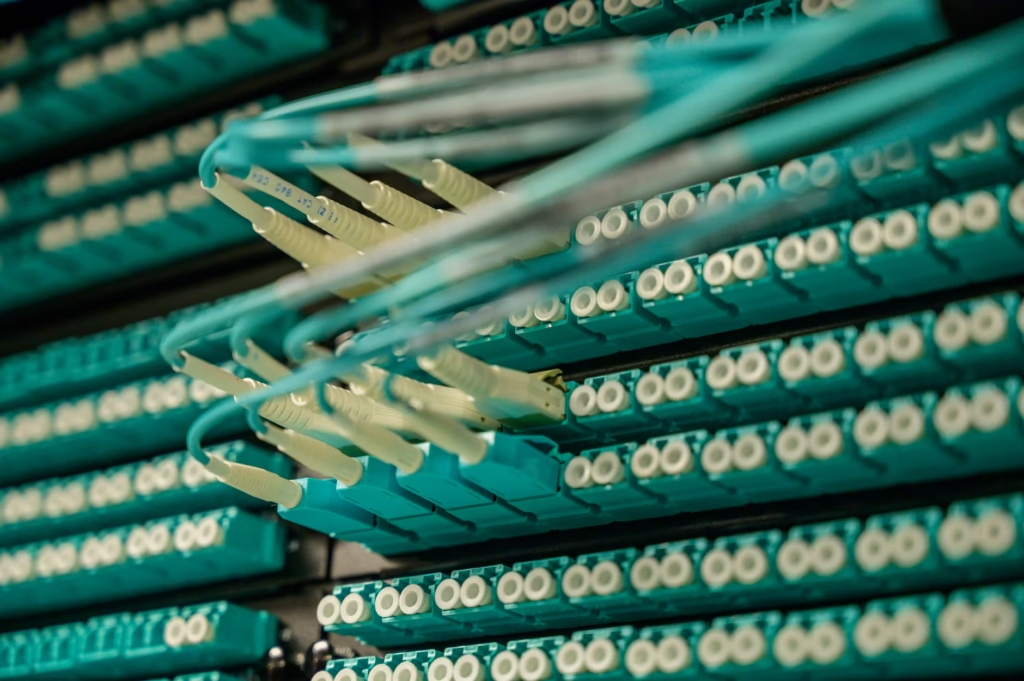
That combination matters because it shows demand on both the software side and the physical infrastructure side. Long-term investors do not have to confine themselves to consumer-facing AI stories. The durable opportunities may sit lower in the stack: compute platforms, networking gear, storage, database infrastructure, power management, cooling, and monitoring tools. The main tradeoff is capital intensity. This part of tech can be exposed to spending pauses, customer concentration, and build-out bottlenecks even when the long-term direction still looks favorable. (gartner.com)
Cybersecurity has one of the clearest must-spend cases
Cybersecurity stands out because the budget logic is unusually durable. Companies can postpone a software project or stretch hardware refresh cycles, but they cannot sensibly decide to become easier to breach. The FBI’s 2025 IC3 report says ransomware remained a significant issue and notes that reported ransomware losses usually do not include lost business, time, wages, files, equipment, or third-party remediation. In other words, the published figures likely understate the real economic damage. That helps explain why security spending often holds up better than more discretionary IT categories. (fbi.gov)

The catch is competition. Cybersecurity is crowded, and customers increasingly want fewer vendors doing more jobs. For long-term investors, that usually makes platform businesses more attractive than narrow point products that can be bundled away. Identity, endpoint, cloud security, and security operations can all be compelling, but the more important question is whether the vendor becomes embedded in daily workflows and expands naturally across the customer’s environment.
This is general sector analysis, not personalized investment advice. Valuation, position size, diversification, taxes, and risk tolerance still matter as much as the sector story.
For investors who want durable growth exposure, start where technology spending is hardest to avoid. Semiconductors offer the broadest picks-and-shovels reach across digital expansion, cloud and data-center infrastructure capture the buildout behind heavier computing demand, and cybersecurity benefits from a threat landscape that businesses cannot ignore. The smartest next step is to compare companies inside those sectors for balance-sheet strength, pricing power, and valuation discipline, rather than buying a trend on excitement alone. (semiconductors.org)
References
- Semiconductor Industry Association – 2025 State of the U.S. Semiconductor Industry – https://www.semiconductors.org/2025-state-of-the-u-s-semiconductor-industry/
- Gartner – Forecast: Public Cloud Services, Worldwide, 2023-2029, 2Q25 Update – https://www.gartner.com/en/documents/6651834
- U.S. Energy Information Administration – Data center server energy use grows across the commercial building stock – https://www.eia.gov/todayinenergy/detail.php?id=67704
- FBI Internet Crime Complaint Center – 2025 IC3 Annual Report – https://www.fbi.gov/file-repository/2025_ic3report.pdf
